
Commercial Solar for Manufacturers & Warehouses in Leeds
What most commercial solar installers don’t tell you.


For manufacturers and warehouse operators across Leeds, interest in solar energy has grown steadily over recent years. Rising electricity costs, increased scrutiny on operating margins, and the need for long-term cost certainty have pushed energy higher up the agenda for many industrial businesses.
Yet commercial solar is often misunderstood. Too frequently, it is presented as a product purchase rather than what it actually is: an infrastructure decision that becomes part of a live, working electrical system.
This distinction matters. In industrial environments, the success of a solar installation depends far less on the panels themselves and far more on how the system is designed, integrated, and managed over time. A strong solar finance plan is instrumental in achieving energy cost savings as well as a reduction in carbon emissions.

Solar in Industrial Settings Is Fundamentally Different
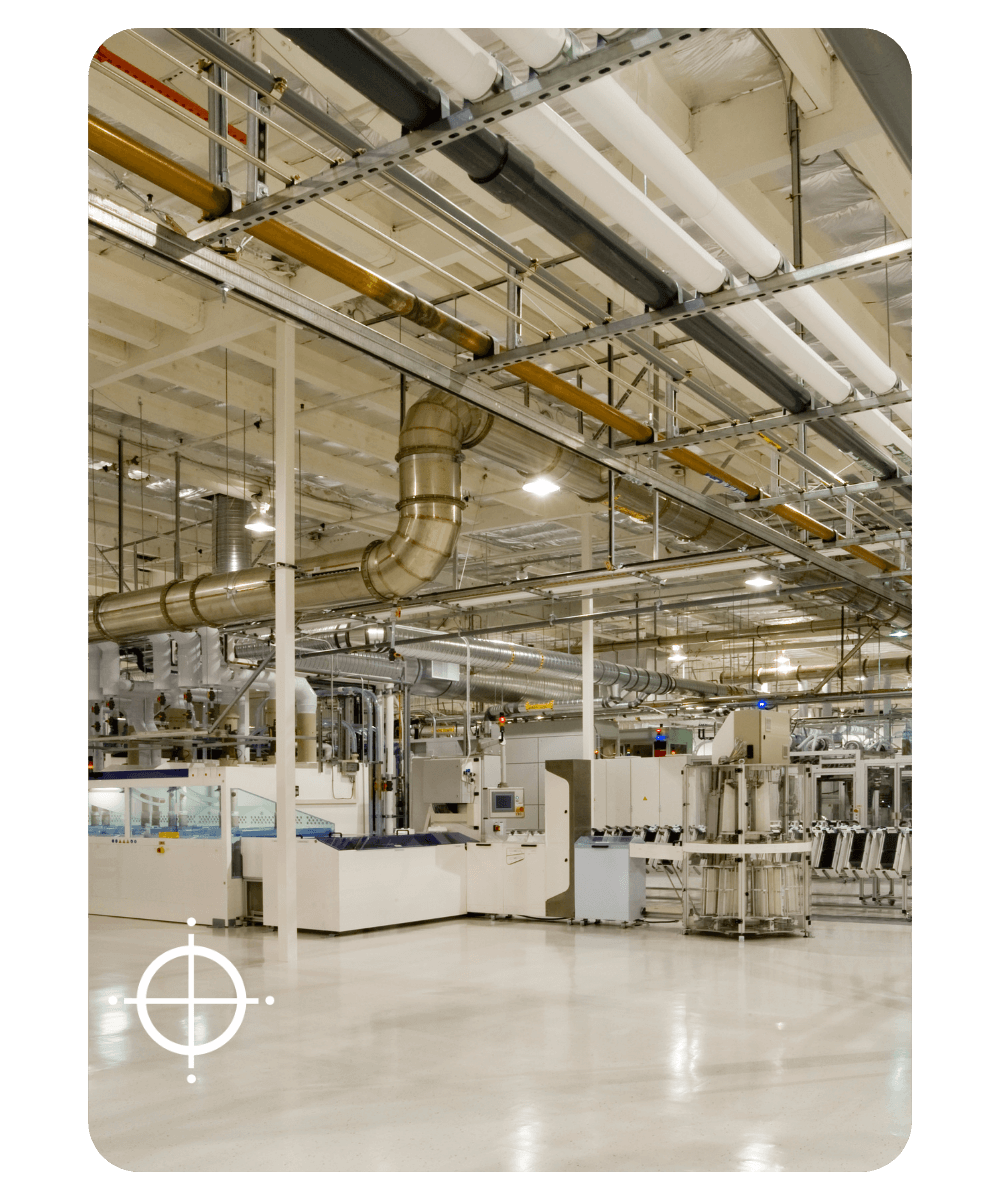
Manufacturing plants and warehouses operate in conditions that are very different from offices or residential properties. Energy demand is higher, more variable, and often mission-critical. Machinery, automation, lighting, heating and ventilation systems all place sustained demands on electrical infrastructure, frequently using three-phase power and operating for extended hours.
In this context, solar cannot simply be “added” to a building. It must work in harmony with existing electrical systems without introducing instability, risk, or operational disruption. When solar is treated as a bolt-on rather than an integrated component, problems tend to surface later, not at installation, but months or years down the line.
Understanding How Energy Is Actually Used Matters More Than Panel Count
One of the most common oversights in commercial solar design is an overreliance on headline consumption figures. Annual energy usage tells only part of the story. What matters just as much is when energy is used, how demand fluctuates during the day, and which systems are sensitive to interruption.
Manufacturing sites often have a combination of continuous baseload demand and sharp peaks tied to production cycles. Warehouses, particularly modern distribution centres, now rely on automation, extended lighting hours and charging infrastructure that create a more consistent electrical load than many assume.
A well-designed solar system responds to these realities. A poorly designed one simply looks good on paper.
Why Some Commercial Solar Projects Disappoint
When commercial solar systems fail to deliver expected results, it is rarely due to the technology. More often, the issue lies in design and integration decisions made early in the project.
Problems tend to emerge where insufficient attention has been paid to existing electrical infrastructure, future expansion plans, or how the system will behave under real operating conditions. In live industrial environments, even minor electrical issues can cause disruption that far outweighs any projected savings.
These are not theoretical risks. They are practical consequences of treating commercial solar as a sales exercise rather than an engineering one.
What a Proper Commercial Solar Assessment Should Involve
A credible commercial solar project begins with understanding the site, not selling a solution. This means reviewing electrical capacity and constraints, analysing how energy is used throughout the working day, and considering how the business might evolve over time.
It also means planning installation in a way that respects operational realities. For many industrial businesses, downtime is not an option. A well-managed project recognises this from the outset.
In some cases, this process reveals that solar should be introduced in stages, or that electrical upgrades should come first. Being open about this is a sign of professional judgement, not hesitation.
Electrical Integration Is the Real Differentiator
At its core, a commercial solar installation interacts with the same systems that keep an industrial site running safely and reliably. Distribution boards, protection devices, load balancing, earthing arrangements and compliance requirements all play a role in determining whether a system performs as intended over its lifetime.
This is why many manufacturers and warehouse operators are increasingly cautious about who they work with. Solar performance figures matter, but confidence in electrical competence matters more. A system that is safe, stable and maintainable will outperform a theoretically more powerful system that is poorly integrated.
What a Proper Commercial Solar Assessment Should Involve
A credible commercial solar project begins with understanding the site, not selling a solution. This means reviewing electrical capacity and constraints, analysing how energy is used throughout the working day, and considering how the business might evolve over time.
It also means planning installation in a way that respects operational realities. For many industrial businesses, downtime is not an option. A well-managed project recognises this from the outset.
In some cases, this process reveals that solar should be introduced in stages, or that electrical upgrades should come first. Being open about this is a sign of professional judgement, not hesitation.
When Solar Is the Right Move, and When It Isn’t
Solar delivers the strongest value for industrial sites with significant daytime energy use and suitable infrastructure. Where those conditions exist, it can provide long-term cost stability and reduced exposure to volatile energy markets.
However, not every site is immediately suited to solar, and not every project benefits from rushing ahead. Understanding when to proceed and when to pause is part of responsible decision-making.
Choosing a Partner, Not Just an Installer
For manufacturers and warehouses, commercial solar is a long-term commitment. The real value comes from working with a contractor who understands industrial electrical systems, live environments and compliance obligations, not just solar hardware.
When solar is approached as part of a wider electrical strategy, it becomes a tool for resilience and control rather than a source of future risk.
For Leeds-based manufacturers and warehouse operators, solar is not simply about lowering energy bills. It is about making informed infrastructure decisions that support operational stability and long-term planning.
Treating commercial solar as an engineering challenge, rather than a product sale, is what separates projects that quietly deliver value from those that create problems later on.


FAQs on Manufacturing & Warehouse Solar PV
What types of renewable energy solutions are suitable for manufacturers and warehouses?
This can cover solar PV, battery storage, EV charging integration, heat recovery, and how each fits industrial energy profiles.
How much can a manufacturing or warehouse business realistically save by installing solar panels?
Provide realistic ranges, influencing factors (size, orientation, usage), and a note on lifecycle value vs upfront cost.
Do industrial buildings in Leeds need electrical infrastructure upgrades before installing renewable systems?
Clarify why load capacity, three-phase systems, switchgear and compliance matter, what an assessment involves, and when upgrades are recommended.
What are the main regulatory or compliance considerations for industrial renewable installations?
Explain planning, building regs, electrical safety standards, inspection regimes, and safe integration with existing systems.
Can renewable energy installations be financed, and what options are available for businesses in Leeds?
Discuss commercial solar financing options (e.g., payment plans, PPAs), how they protect cash flow, and which fits different business models.
How do manufacturers and warehouses maintain renewable systems to ensure long-term performance?
Provide practical advice around service contracts, inspections, performance monitoring, and warranties — emphasising long-term reliability.
Ready to Reduce Your Energy Costs?
Speak to our commercial solar team today or try the calculator to see your potential savings.
Contact Scotts Electrical Leeds
Looking for reliable commercial solar panel installers in Leeds or West Yorkshire? Contact our expert team today to arrange a free site assessment and tailored quote.
Scott Electrical
Richmond House
Redvers CI
Leeds
LS16 6QY
Fill in our contact form, and we will get back to you shortly
5 Star Reviews
Trusted by businesses across Leeds and Yorkshire for reliable, high-quality electrical work in commercial and industrial environments.




The communication was good throughout, the work was completed on time, and everything was left clean and tidy. It was clear they knew what they were doing, and all the work was carried out professionally.
If you’re looking for a reliable commercial electrician in Leeds for three-phase electrical installations or general commercial electrical work, I’d happily recommend Scott Electrical (Leeds) Ltd.







I'd definitely use again and recommend to my friends and family....

When i rang and spoke to Paul he came across very well and i was confident to give him my job to install the car charger.
The date was confirmed and Paul himself and one of his colleagues arrived on time. They completed the installation without any issues and their work was of a very high order . Furthermore Paul took the time to explain thoroughly the workings of the EO app which is required for use with the charger.
I would certainly recommend Paul /Scott Electrical to my friends and colleagues for any future electrical work.


