Related Articles
- Government Depot Charging Scheme: A Guide for UK Fleet Operators
- Best Home EV Chargers UK: Zappi vs Ohme vs Hypervolt
- Tethered vs Untethered EV Chargers: Which Is Best for Your Home?
- EV Charger Installation Cost in Yorkshire: What Affects the Price?
- Can My Home Electrical Supply Handle an EV Charger?

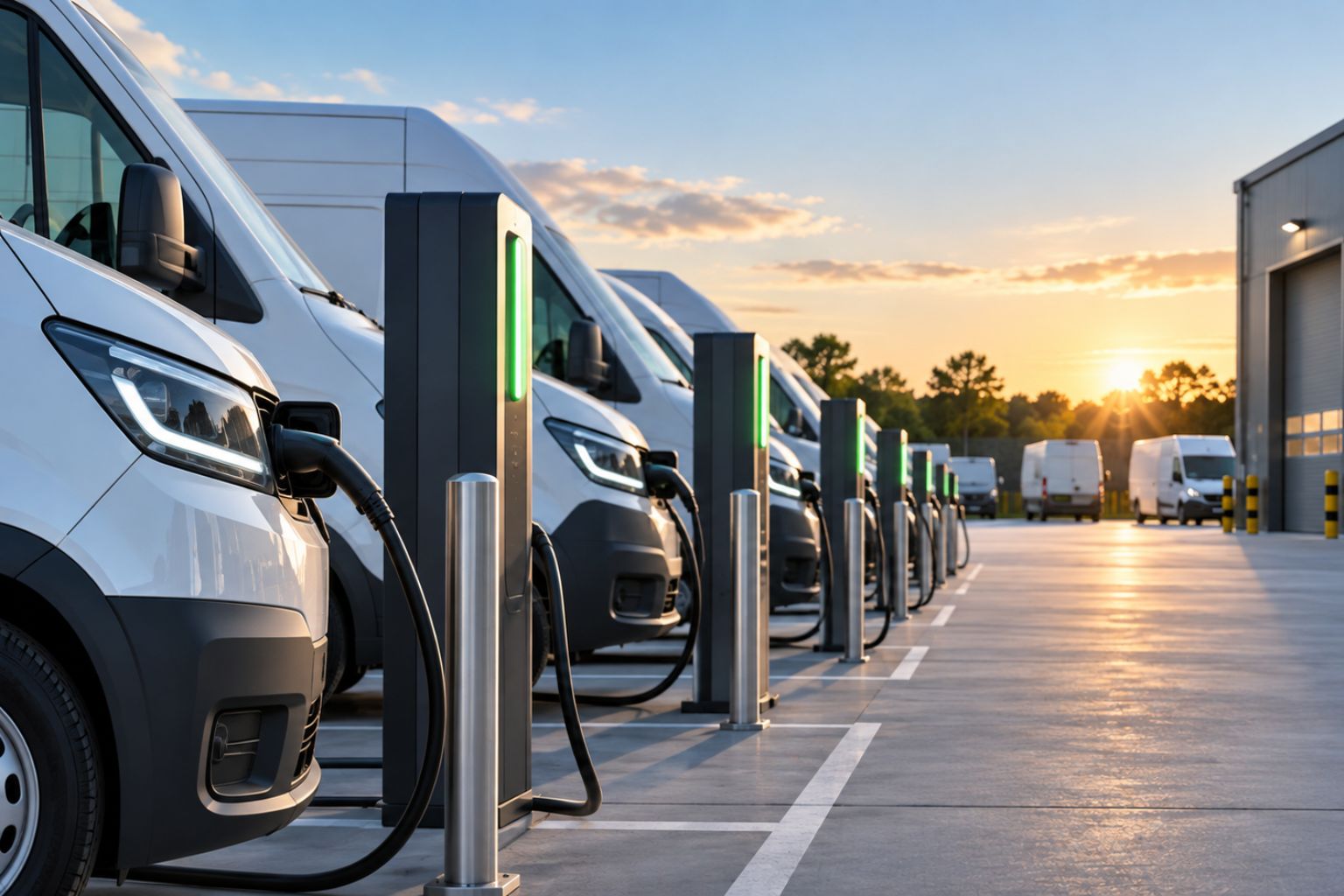
Electrifying a commercial vehicle fleet involves more than choosing the vehicles.
For businesses operating electric vans, HGVs or coaches, one of the biggest considerations is often the infrastructure required to charge those vehicles reliably at the depot.
How much charging capacity will be required? Does the site have sufficient electrical capacity? What type of chargers should be installed? Will civil or electrical works be necessary? And, ultimately, how much will the project cost?
The Government’s Depot Charging Scheme has been introduced to help address some of these barriers by providing funding towards the cost of installing charging infrastructure at commercial fleet depots.
With a multi-year funding programme running to 2030, the scheme could significantly reduce the initial cost of depot charging infrastructure for eligible UK fleet operators.
This guide explains how the Depot Charging Scheme works, who may be eligible and what businesses considering fleet electrification should be doing now.
What is the Depot Charging Scheme?
The Depot Charging Scheme is a UK Government funding programme designed to support the transition to zero-emission commercial vehicles.
It provides financial support towards the installation of charging infrastructure at depots used by operators of:
- battery-electric vans
- battery-electric HGVs
- battery-electric coaches
The Government’s objective is to remove some of the infrastructure cost barriers associated with fleet electrification and accelerate the adoption of zero-emission commercial vehicles.
Following an earlier pilot, the Government has launched a £170 million multi-year funding programme running from April 2026 to 2030.
This makes the scheme particularly relevant to fleet operators planning their transition to electric vehicles over the next several years, rather than only organisations that have already completed that transition.
How much funding is available through the Depot Charging Scheme?
For the first application window of the multi-year scheme, covering projects delivered during 2026/27, the Government offered funding covering:
70% of eligible chargepoint and civil costs, up to a maximum grant of £1 million per organisation across all sites.
There was no limit on the number of depot sites that could form part of an application, although organisations were restricted to one application.
For example, under the first-window funding rate, £300,000 of eligible project costs could potentially have attracted £210,000 of funding, while £1 million of eligible costs could potentially have attracted £700,000.
The maximum funding available across an organisation was £1 million.
However, businesses planning for the next funding round should not assume the 70% funding rate will continue.
The Government has confirmed that grant rates are expected to reduce during the lifetime of the programme as charging infrastructure becomes more affordable. The terms and grant rate for the next application window have not yet been confirmed.
When is the next Depot Charging Scheme application window?
The first 2026/27 application window closed on 30 June 2026.
The Government currently expects the next application window to open on 28 October 2026 and close on 29 January 2027.
Projects funded through this round are expected to:
begin from April 2027 and be completed by 31 March 2028.
The Government has indicated that £38 million is expected to be available for projects in the 2027/28 funding period.
Importantly, the final terms and funding rates for this next application window are still to be confirmed.
For businesses considering applying, that makes the period before the application window important.
A depot charging project can involve considerably more planning than simply obtaining a price for several EV chargers.
Who is eligible for the Depot Charging Scheme?
The detailed eligibility requirements should always be checked against the conditions of the relevant application window.
Under the first 2026/27 funding round, applicants needed to meet a number of requirements.
Among them, the organisation’s fleet needed to include — or be expected to include — at least one battery-electric van, HGV or coach.
Applicants also needed to:
- be registered and operating in the UK
- have operated their organisation and vehicle fleet in the UK for at least one year
- own or lease one or more UK depots
- use the funding within the UK
- have approval for the proposal from a senior leader within the organisation
- agree to ongoing monitoring and evaluation, including potential site audits
- ensure commercial vehicles are the primary users of the funded infrastructure.
The scheme therefore isn’t restricted to businesses that already operate a large fully electric fleet.
Under the previous criteria, an organisation planning to introduce battery-electric commercial vehicles could potentially qualify, provided its application demonstrated how those vehicles would affect its charging requirements.
That is particularly important for businesses developing a phased fleet electrification strategy.
Can the Depot Charging Scheme be used for multiple depots?
Under the first application window, yes.
There was no limit to the number of sites that could be included, although an organisation could submit only one application and the £1 million maximum funding limit applied across all of its sites.
For a multi-depot fleet, this creates an important planning question.
Rather than considering each depot independently, businesses may benefit from developing a broader fleet electrification strategy that identifies:
- which depots should be electrified first
- how many vehicles operate from each location
- daily vehicle mileage and duty cycles
- vehicle dwell times
- charging windows
- existing electrical capacity
- likely future vehicle numbers
- the appropriate charging power at each site.
The objective shouldn’t simply be to install the largest possible number of chargers.
It should be to create charging infrastructure capable of supporting the operational requirements of the fleet.
What costs can the Depot Charging Scheme cover?
For the first 2026/27 window, the Government described the scheme as covering 70% of chargepoint and civil costs incurred, subject to the overall funding limit.
The precise definition of eligible expenditure is important.
Commercial depot charging projects can potentially involve far more than purchasing the physical chargers.
Depending on the site and proposed fleet, a project may require elements such as electrical distribution equipment, cabling, charger foundations, trenching and associated civil engineering.
Businesses should therefore establish which parts of their proposed project qualify under the relevant funding round rather than assuming every cost associated with fleet electrification will be grant-funded.
What about the electricity supply to the depot?
This can be one of the most important questions in any commercial EV charging project.
A depot that has historically needed electricity only for offices, lighting, equipment and general operations may see its electrical demand increase substantially when multiple commercial vehicles begin charging.
The effect depends on factors including:
- number of vehicles
- vehicle battery capacity
- daily energy consumption
- available charging time
- charger power
- number of vehicles charging simultaneously
- existing site electrical demand.
Installing chargers without understanding these requirements can result in infrastructure that either cannot support the fleet or is unnecessarily expensive.
An assessment of the site’s existing electrical capacity should therefore be undertaken early in the planning process.
Where additional capacity is required, discussions with the relevant Distribution Network Operator (DNO) may also become part of the project.
Do you necessarily need rapid chargers at a fleet depot?
Not always.
Charging speed should be determined by how vehicles actually operate.
A van returning to a depot at 5pm and remaining parked until 6am has a very different charging requirement from an HGV that needs to return to service after a short turnaround period.
Higher-powered charging can reduce charging times, but it can also increase electrical demand and potentially increase the complexity and cost of the infrastructure required.
A well-designed depot charging strategy considers the relationship between:
vehicle energy requirement + available dwell time + charger power + available site capacity.
For some fleets, overnight charging using lower-powered chargers may provide everything required.
Other operations may require a combination of charging speeds.
This is why fleet and site analysis should come before charger selection.
Should businesses install only enough chargers for their current fleet?
Not necessarily.
If a business expects its electric fleet to grow, designing solely around today’s requirements can create additional work and cost later.
For example, a depot may initially require charging for five electric vehicles but expect to operate 25 within several years.
That doesn’t automatically mean installing 25 chargers immediately.
It may, however, influence decisions around:
- electrical distribution
- cable routes
- ducting
- switchgear
- charger locations
- parking layout
- load management
- future electrical capacity.
Considering expansion at the design stage can make it easier to add charging capacity as more vehicles are electrified.
What is load management and why does it matter?
One of the ways businesses can make better use of available electrical capacity is through intelligent load management.
Rather than allowing every connected vehicle to draw its maximum charging power simultaneously, a charging management system can distribute the available electrical capacity between vehicles.
Charging can potentially be prioritised according to operational requirements.
For example, a vehicle that needs to leave at 5am may receive charging priority over another vehicle that will remain at the depot until midday.
This can help businesses design charging around vehicle schedules and available site capacity rather than treating every charger as an independent maximum electrical load.
For larger fleets, charging software and energy management can therefore become an important part of the overall infrastructure strategy.
What should businesses do before applying for the Depot Charging Scheme?
Businesses interested in the next funding window shouldn’t necessarily wait for applications to open before considering their infrastructure.
There is useful preparatory work that can be undertaken beforehand.
1. Understand your fleet
Establish which vehicles are likely to transition to electric and over what period.
Consider vehicle type, mileage, routes, energy consumption, operating hours and depot dwell time.
2. Understand your depot
Review parking arrangements, vehicle movements and suitable locations for charging infrastructure.
3. Assess the existing electrical supply
Determine the site’s existing electrical capacity and current demand.
This helps establish how much additional charging load the site may be able to accommodate.
4. Calculate the charging requirement
Don’t start with the charger.
Start with the vehicle.
Understanding how much energy each vehicle needs and how long it remains at the depot helps determine the charging power actually required.
5. Consider future expansion
Think beyond the first electric vehicles.
A phased infrastructure strategy can help ensure that today’s investment doesn’t unnecessarily restrict tomorrow’s fleet.
6. Identify potential infrastructure works
Understand whether the project could require new distribution equipment, cable routes, groundworks, foundations or other supporting infrastructure.
7. Build a realistic project budget
A detailed project scope makes it much easier to understand the potential investment required and the effect grant funding could have on the business case.
Can work begin before the grant is awarded?
This is an important point.
Under the first 2026/27 application window, expenditure was only considered eligible after the Grant Funding Agreement had been signed.
Businesses should therefore be extremely careful about committing to work on the assumption that it can subsequently be claimed through the scheme.
The requirements of the new application round should be checked when its final guidance is published.
Planning and feasibility work can still be valuable beforehand, but the timing of procurement, contracts and physical installation needs to align with the funding rules.
Can Depot Charging Scheme infrastructure be shared with another fleet?
The first-round criteria allowed infrastructure to be shared with other fleet operators.
However, where this occurred, the pricing model was required to operate on a cost-recovery basis for at least three years following the grant award.
This could be particularly relevant for operators sharing logistics facilities or businesses considering collaborative charging arrangements.
Again, the conditions applying to the next application window should be checked once its final guidance is published.
Can businesses combine the Depot Charging Scheme with other government funding?
Under the first-round eligibility requirements, applicants had to agree not to obtain similar Government funding for the same funded activities.
That does not mean other support for fleet electrification is unavailable.
For example, the Government separately identifies the Zero Emission Van and Truck Grant as support towards eligible electric commercial vehicles.
The important distinction is between support for the vehicle and duplicate funding for the same infrastructure expenditure.
Businesses should therefore look at the complete fleet electrification business case rather than considering the depot charger grant in isolation.
Why planning your depot charging infrastructure early matters
The Depot Charging Scheme can potentially reduce the capital required to electrify a commercial fleet, but funding is only one part of the project.
The more fundamental question is whether the proposed charging infrastructure will work for the fleet.
A successful depot charging project needs to bring together:
Fleet requirements → charging demand → site capacity → infrastructure design → installation → future expansion.
Getting those decisions right at the beginning can help avoid under-sizing infrastructure, unnecessary electrical upgrades or installing charging equipment that doesn’t reflect the way vehicles actually operate.
Preparing for the next Depot Charging Scheme window
The next Depot Charging Scheme application window is currently expected to open on 28 October 2026, with £38 million earmarked for the 2027/28 funding period.
The Government has not yet confirmed the grant rate or full terms for this phase, so businesses should avoid building investment decisions around the previous 70% funding rate until the new guidance is published.
However, organisations considering electric vans, HGVs or coaches can use the time before the application window to understand their fleet, depot and electrical requirements.
Doing that work early means that when the funding criteria are confirmed, the business is in a much stronger position to understand what infrastructure it needs, what the project is likely to cost and whether the Depot Charging Scheme could support it.
Planning depot charging infrastructure?
If you’re considering electrifying your commercial fleet or want to understand how the Depot Charging Scheme could support your investment, we can help you plan the right charging infrastructure for your site.
From assessing your fleet’s charging requirements and existing electrical capacity through to infrastructure design and installation, we can help you build a depot charging solution that works for your operation now and as your fleet grows.
Speak to our team about your depot charging requirements.
More On EV Charging
Find articles on Electrical Vehicle charging and EV installation
Government Depot Charging Scheme: A Guide for UK Fleet Operators

Best Home EV Chargers UK: Zappi vs Ohme vs Hypervolt
Tethered vs Untethered EV Chargers: Which Is Best for Your Home?
EV Charger Installation Cost in Yorkshire: What Affects the Price?
Can My Home Electrical Supply Handle an EV Charger?
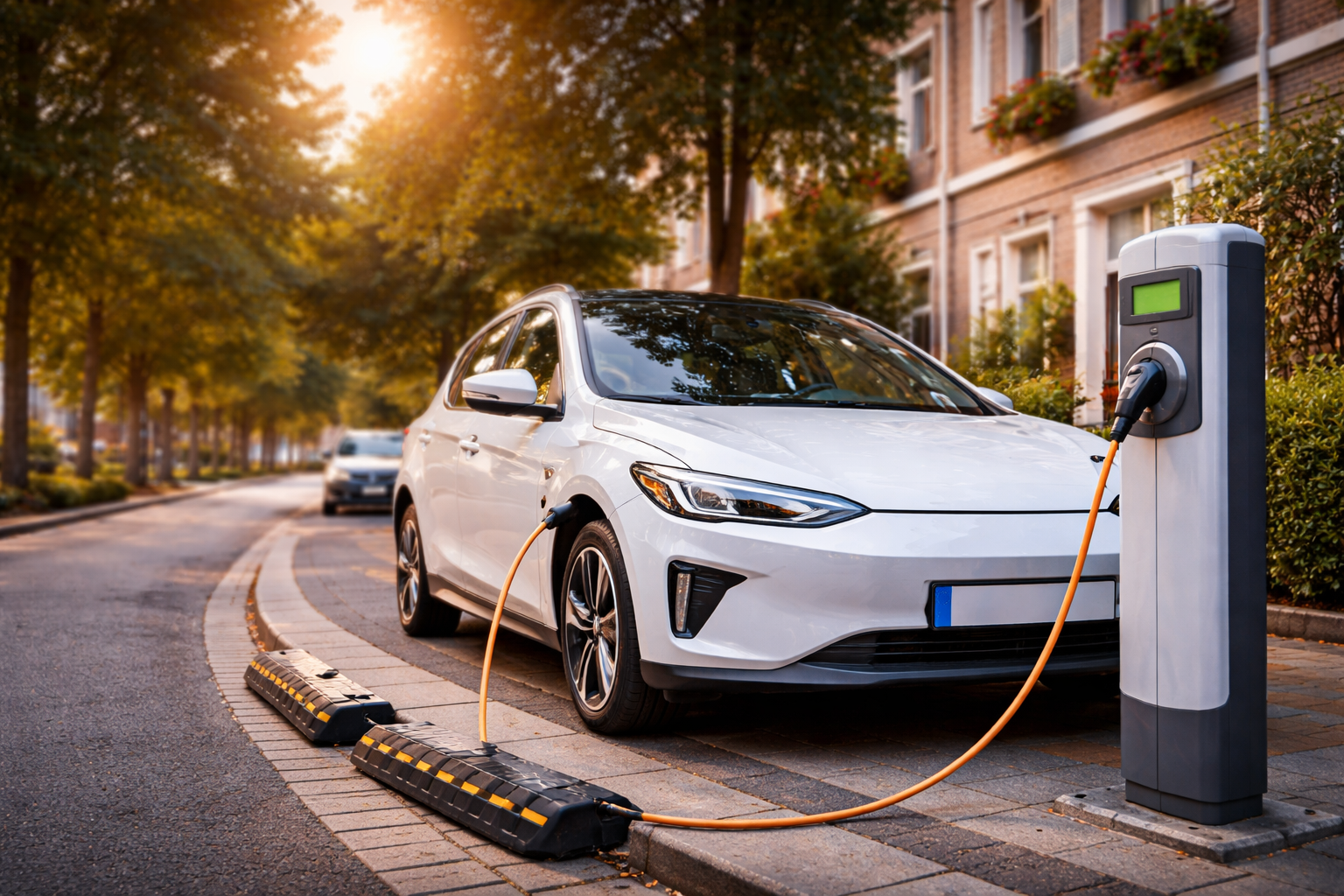
No Driveway? How You Can Still Charge an Electric Car at Home
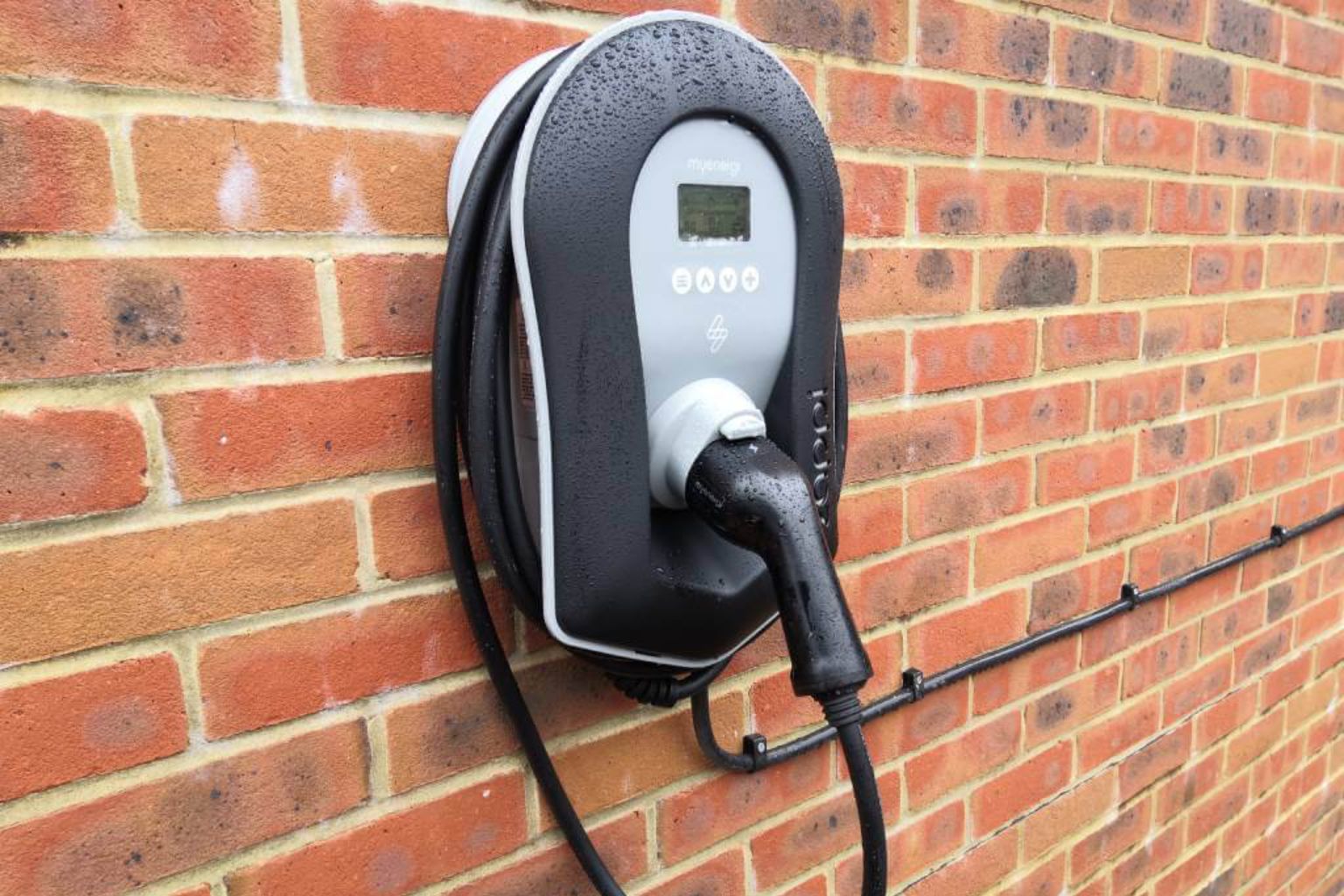
Best EV Chargers for Octopus Intelligent Go and Smart Tariffs
Get A Quote For EV Charger Installation Near You
If you’re considering installing an EV charger at home or at your business premises, Scott Electrical can help.
We provide EV charger installation across West Yorkshire, helping homeowners and businesses charge their electric vehicles safely and efficiently. We cover Leeds, Bradford, Ilkley, Otley, Harrogate, Knaresborough, Halifax, Huddersfield, Wakefield, Brighouse, Cleckheaton, Dewsbury, Birstall and surrounding locations.
Contact our team today to request a quote or discuss your EV charger installation requirements.
Scott Electrical
Richmond House
Redvers CI
Leeds
LS16 6QY
Fill in our contact form, and we will get back to you shortly
"*" indicates required fields